
Built to Last: 70 Years of the Interstate Highway System and its Future Role in the Hudson Valley
By SHARON REGAN MASCIOVECCHIO
Every day, hundreds of thousands of people travel the Hudson Valley’s interstate highways without giving much thought to how they came to define the region’s economy. For 70 years the Interstate Highway System has connected communities, moved commerce and created opportunities that continue to shape where we live, work and build.
That legacy began on June 29, 1956, when President Dwight D. Eisenhower signed the Federal-Aid Highway Act, launching one of the most ambitious public works programs in American history. Inspired in part by his experiences traveling across the country and observing Germany’s autobahn system during World War II, Eisenhower envisioned a modern highway network that would strengthen national defense, improve mobility and unite the nation through infrastructure.
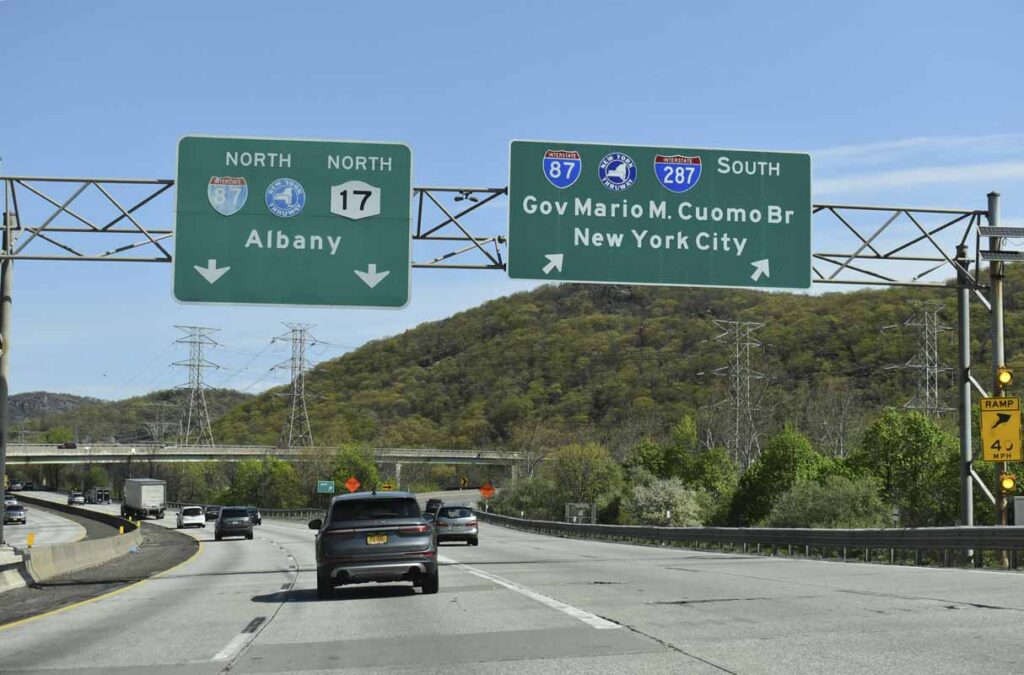
The Interstate Highway System did far more than build roads. It built opportunity. Seventy years later, that system continues to pay dividends in the Hudson Valley.
Over the past seven decades, the nation’s interstate highways have fueled economic growth, strengthened national defense, expanded commerce and opened new markets. They have connected manufacturers to suppliers, businesses to customers and workers to jobs. Few public investments have delivered a greater return on investment or had a more profound impact on the American economy.
Here in the Hudson Valley, that impact is evident every day.
Interstate 87, the New York State Thruway, serves as the region’s primary north-south transportation corridor, connecting New York City with Albany and beyond. Interstate 84 links the Hudson Valley to Pennsylvania and New England, making it one of the Northeast’s most important freight routes. Interstate 287 connects Westchester County to the greater New York metropolitan area, supporting commuters, commerce and regional business activity.
Together, these highways have helped transform the Hudson Valley into one of New York’s most dynamic economic regions. They support virtually every sector of our economy, from construction, manufacturing and logistics to healthcare, higher education, tourism and commercial development. Every day they move millions of people and countless tons of goods that keep our regional economy moving.
“The Interstate Highway System transformed the Hudson Valley into one of the nation’s most important economic corridors,” said John T. Cooney Jr., Executive Director of the Construction Industry Council of Westchester & Hudson Valley. “Seventy years later, those same highways continue to support our economy, our workforce and our quality of life. As businesses continue to invest in the Hudson Valley, we must remain committed to maintaining and modernizing the infrastructure that keeps pace with economic development. Strong infrastructure not only supports existing employers, it helps attract new investment, strengthens our competitiveness and makes the Hudson Valley a place where companies want to grow and people want to build their careers. Infrastructure is not an expense. It is an investment in our future.”
Behind every mile of highway, every rehabilitated bridge and every improved interchange are the union contractors, skilled tradespeople, engineers and construction professionals who build and maintain the infrastructure that keeps the Hudson Valley moving. Their expertise has helped shape the region for generations, and their work will continue to define its future as new investments strengthen transportation networks, support economic development and improve quality of life throughout the region.
While population growth in the Hudson Valley has tempered in recent years, the region continues to see significant private investment in manufacturing, healthcare, housing, higher education, distribution and mixed-use development. As businesses continue to recognize the Hudson Valley as an attractive place to invest, maintaining that momentum will require a transportation network capable of supporting long-term economic growth.
At the same time, employers across nearly every industry are competing for skilled workers. Reliable infrastructure plays a vital role in attracting and retaining that workforce. Employees want communities where transportation is efficient, commutes are predictable and infrastructure supports a high quality of life. Companies evaluating where to expand or relocate also look for regions that demonstrate a commitment to maintaining the roads, bridges, utilities and public infrastructure that modern businesses depend upon.
For the construction industry, that presents both a challenge and an opportunity.
Every highway reconstruction project, bridge rehabilitation, interchange improvement and infrastructure investment creates family sustaining careers for contractors, engineers, labor organizations and the skilled trades. These projects not only improve mobility and safety, they strengthen the regional economy and position the Hudson Valley for continued private investment.
As many segments of the Interstate Highway System enter their eighth decade of service, the focus has shifted from expansion to preservation and modernization. Aging infrastructure, evolving freight patterns, emerging technologies and increasing demands on the transportation network require thoughtful planning and sustained public investment.
The Interstate Highway System stands as one of the greatest public works achievements in American history because previous generations had the foresight to build for tomorrow, not just for the needs of their day.
That same vision is needed today.
Maintaining and modernizing the Hudson Valley’s transportation infrastructure is essential to supporting economic development, attracting employers, retaining a skilled workforce and ensuring our region remains competitive for decades to come. Whether it is improving highways, rehabilitating bridges, upgrading transit systems or investing in resilient infrastructure, these projects represent investments in the future of our communities.
For the construction industry, infrastructure is more than concrete, steel and asphalt. It is the foundation upon which economic opportunity is built.
As we celebrate the 70th anniversary of the Interstate Highway System, we should also recognize the responsibility we share to continue investing in the infrastructure that will support the Hudson Valley’s next generation of growth. Just as the visionaries of 1956 built a transportation network that transformed America, the investments we make today will determine the strength, competitiveness and prosperity of the Hudson Valley for generations to come.
Published: July 16, 2026.