
Westchester Cuts Budget Deficit Due to
Higher Revenues, Additional State Funding
WHITE PLAINS—Westchester County Government now projects its current General Fund deficit at $9.4 million, a more than $7-million improvement from its first quarter financial forecast of a $16.6 million budget shortfall.
According to Westchester County’s Second Quarter Financial Forecast released on Aug. 14, there has been a modest improvement in the county’s fiscal outlook for 2026, reflecting strong revenue performance and continued disciplined financial management despite ongoing economic uncertainty and rising operating costs.
The county is now projected to spend about $43.4 million more than budgeted for 2026, but stronger-than-expected revenues are expected to bring in an additional $34 million, offsetting some of those costs. Much of the improvement is driven by stronger-than-anticipated sales tax collections and additional state funding, which have helped offset increasing expenditures in several key areas.
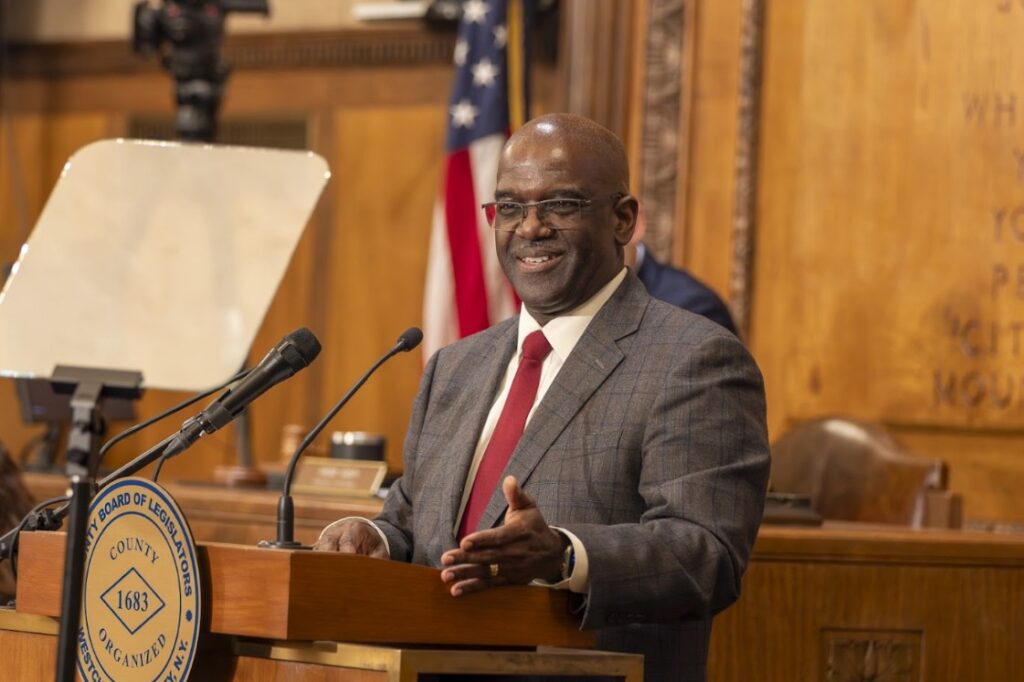
Westchester County Executive Ken Jenkins said: “Our Second Quarter Forecast demonstrates that disciplined financial management continues to produce results, even as counties across the nation face significant economic uncertainty and rising costs. While we are encouraged by stronger-than-expected revenues, we remain vigilant. We will continue making responsible decisions that protect essential county services while safeguarding taxpayers and maintaining Westchester’s long-term financial stability.” Westchester County Budget Director Larry Soule added: “Based on our current projections, we do not anticipate the need to borrow to finance tax certiorari settlements or amortize the county’s pension obligation.”
Westchester County Director of Operations Emily Saltzman warned that the county still faces challenging fiscal times ahead and pointed to a host of continued cost pressures, such as:$5.3 million in employee healthcare costs; $7.0 million in self-insurance costs for liability and workers’ compensation; $3.0 million in overtime expenses; $2.9 million in preschool services for children with special needs; a $4.2-million shortfall in Bee-Line fare revenue; s $1.6-million revenue shortfall at Playland, primarily due to weather-related impacts, and $17.3 million associated with the removal of tax certiorari bonding and pension amortization from the financial plan.
The county also stated that the current economic climate has created uncertainty for 2027, citing potential reductions in federal funding, continued inflationary pressures, rising labor, healthcare, and insurance costs and uneven economic conditions affecting businesses and residents as potential negative influences on next year’s county budget.
Published: August 19, 2026.