
Tariffs Keep Contractors Guessing on Material Costs;
Prices Jump 6% through May on Annualized Basis
NEW YORK—Uncertainty surrounding trade policy and its impact on materials costs could lead more contractors to hold off on shovels hitting the ground, according to construction industry analysts. Construction input costs climbed 6% through May on an annualized basis and have remained up more than 40% since February 2020, according to the U.S. Bureau of Labor Statistics.
That jump follows several months of policy uncertainty, with tariff announcements rolled out unevenly and implementation timelines in flux. In fact, contractors say tariff hikes have already triggered delays on certain projects. Pittsfield, Massachusetts-based Unistress Corp., for example, recently laid off 233 workers after the postponement of two major contracts due to steel price volatility.
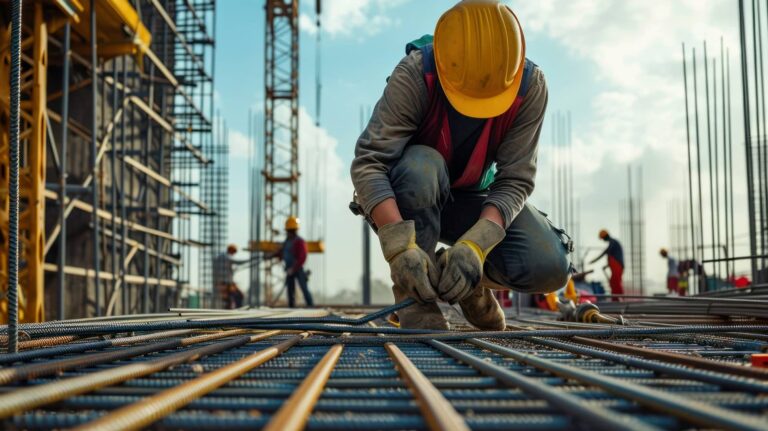
The precast manufacturer said the delays caused significant financial pressure, temporarily shrinking its backlog and forcing the company to cut nearly half its workforce.
Much of the confusion stems from how President Donald Trump has rolled out tariffs this year. The Trump administration initially suspended many country-specific duties, then announced in July that they would resume on Aug. 1 for trading partners without a deal. That has left many construction firms unsure how to plan procurement.
“The impact of tariffs will impact not just the price, or cost, but also the quantity consumed of such goods,” said Michael Guckes, chief economist at ConstructConnect, a Cincinnati-based construction data provider. “The fact that many tariffs have been delayed, some several times now, may mean that more inflationary pain is to come.”
The levies will directly affect key construction components, namely rebar, structural steel, copper and aluminum, said Michael O’Reilly, vice president at Rider Levett Bucknall, a New York City-based construction consultancy firm. “Given the current landscape, we anticipate continued volatility in materials pricing through the second half of the year,” he said. “A meaningful decline in costs appears unlikely without greater clarity or stabilization in trade dynamics.”
If materials costs stay elevated, that could prolong the caution already taking hold across parts of the construction industry, said Mr. O’Reilly. Much of that reaction will depend on how administration policies and broader economic conditions evolve over the coming months.
“Contractors are adapting where they can, through smarter procurement, tighter project planning and more selective bidding,” he added. “While uncertainty remains, the industry is staying agile and watching closely for signs of stabilization that could unlock more activity in the second half of the year.”
Though the whipsaw of changing or delaying tariffs may not be as constant as the earlier days of the Trump administration, new changes are still rolling out. The U.S. announced plans to install a 50% tariff on copper imports, a common material on data center projects, starting Aug. 1. The move follows the increase on steel and aluminum tariffs from 25% to 50% earlier this summer. Despite the tariff hikes however, planning activity rebounded in June, according to Dodge Construction Network.
Published: July 15, 2025