
How SEQRA Reform Is Changing
Hudson Valley Commercial Real Estate
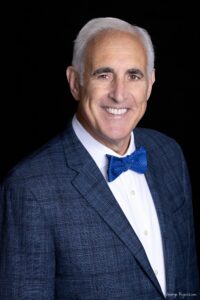
By PAUL ADLER, ESQ.
Commercial real estate in New York’s Hudson Valley is undergoing a genuine realignment, not the collapse some predicted, nor a V-shaped recovery, but a recalibration of capital and expectations that rewards patience and local knowledge. At Rand Commercial, we track this shift daily across Rockland, Orange, Westchester, Putnam and Dutchess counties.
Interest rates remain the central force shaping deal velocity. The high-rate environment of 2023–2025 left sellers anchored to pre-hike valuations while buyers demanded yields reflecting the new cost of capital. That stalemate is cracking. Regional lenders are re-entering cautiously, CMBS spreads have stabilized and financing conversations frozen a year ago are thawing for industrial and multifamily assets. But capital remains selective. Bridge lenders are expensive, community banks are discerning, and sponsors need stronger equity and more conservative pro formas than before 2022.
Which brings me to the most important development in years: Governor Hochul’s SEQRA reform under her “Let Them Build” agenda. For decades, the State Environmental Quality Review Act has been weaponized by development opponents to trigger years of delay and litigation that kill projects financially before a shovel breaks ground, not because of genuine environmental harm, but as a procedural tool. A study by New York City and State Homes and Community Renewal found that virtually none of the thousands of housing projects undergoing SEQRA review had significant environmental impacts. The process was manufacturing delay, not catching problems.
Hochul’s reform, incorporated into the FY27 budget, would exempt qualifying housing projects, those on previously disturbed land, compliant with local zoning, connected to water and sewer, and outside flood zones, from additional review, while leaving air quality, water quality and environmental justice protections intact. For the Hudson Valley, where stalled multifamily projects in Nyack, Spring Valley, Haverstraw, Beacon, Newburgh and Poughkeepsie sit on sites with infrastructure, community support and real housing need, this is transformational. It will not override local zoning or control, but it removes the procedural filibuster. A municipality that says yes to a project will actually see it move forward.
As the governor put it, communities that say yes to housing should not get stuck in regulatory hell, a policy signal that developers, lenders and brokers should take seriously. Jurisdictions that streamline approvals and update comprehensive plans now will differentiate themselves from those still using process as a growth management tool. Beyond SEQRA, under-resourced planning boards, contested environmental impact statements and traffic studies used as political instruments remain high-friction realities, though Hochul’s mandate for agencies to evaluate and track permitting processes signals a broader cultural shift.
Market conditions, rates, tariffs and selective lending, will resolve through the natural cycle, as they always do. The structural impediments SEQRA has enabled will not self-correct. They require political courage and legislative action, which the governor has now provided. For those with capital, sites and patience, this is the moment to be ready.
Editor’s Note: This is an abridged version of Mr. Adler’s column that originally was published in the Rockland County Business Journal. For the full article, read the upcoming July 2026 edition of CONSTRUCTION NEWS.
About the author: Paul Adler, Esq. is Chief Strategy Officer, Rand Commercial in Rockland County, NY. He is an attorney and commercial real estate strategist with decades of experience in the Hudson Valley and New York metropolitan markets.
Published: June 24, 2026.