
Energy Reliability, Supply Shortage Lead
Experts’ Concerns at HVCIP Winter Meeting
NAPLES, FL— The challenge to deliver reliable electricity to the grid—and programs proposed to close a projected gap that’s growing each year over the past half decade—took centerstage at the 2026 Hudson Valley Construction Industry Partnership (HVCIP) Mid-Winter Meetings, which was held Feb. 22-26 at the Ritz-Carlton, Naples in Florida.
In a morning presentation on Feb. 23, Hudson Valley Building Trades President L. Todd Diorio introduced a panel of experts who discussed major projects in the pipeline that will produce more energy to meet both current needs as well as serve the significant developments now popping up on the horizon. When it comes to supply shortfall, the panelists were unanimous in their concerns that if the current trendline continued, New York State could face serious energy generation deficiencies, resulting in intermittent brown outs and blackouts (think California) within the next two to five years.
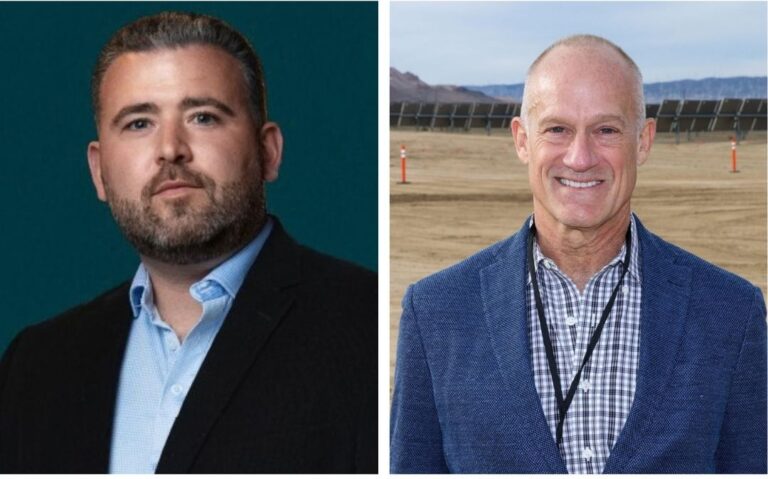
“Reliability assessments show tightening reserve margins following the loss of 2,000 megawatts of dispatchable capacity,” said Tommy Meara, a partner at Mozie Strategies, a public affairs consulting firm. “The loss of supply that was caused by taking Indian Point nuclear power offline and the retirements of older natural gas power plants means we’re not meeting the demand in load growth with increased generation of electricity.”
Union officials and energy experts agreed that the Hudson Valley will play a central role in helping to fill the state’s rising energy demands—both as a conduit for power generated in other parts of the state and as a strategic region to generate sources of energy itself for the grid.
Two projects discussed at the morning session now serve as examples of the role the region can play in this sector. The first is the battery storage project proposed in Ulster County to supplement the grid during peak load demand. Terra-Gen, a private developer, has applied to build and operate a 250-megawatt lithium-ion battery energy storage system (BESS) on 15 acres of privately owned land in the Town of Ulster.
“The completed project would supply electricity to more than 250,000 homes and businesses for four hours, providing reliability and resiliency for the power grid,” explained Vice President Mark Turner of Terra-Gen. The application to build and operate the BESS is currently being reviewed by the Town of Ulster. Costing “hundreds of millions of dollars to develop,” Mr. Turner expressed confidence that the current environmental review under the State Environmental Quality Review Act (SEQRA) will determine that the BESS can be built and operated safely. Construction is expected to begin in 2028, pending final approvals.
“We also have deep trust in the Hudson Valley Building & Construction Trades Council’s union workforce, which has safely built the region’s largest projects,” he added.
A second project discussed in depth at the HVCIP conference was the $3-billion Propel NY Energy, a network/conduit for power generated and collected from conventional and sustainable energy sources on Long Island to feed the grid in Downstate and in the Lower Hudson Valley. Propel NY was selected through a competitive process conducted by the New York grid operator, the New York Independent System Operator. It’s currently being studied, under an Article VII review of the New York State Public Service Law for siting, constructing— as well as for environmental impacts and public necessity—as a major electric and gas transmission facility, transmitting energy from offshore and onshore wind, solar projects, and traditional fossil fuel sources.
Taking a more circumspect view of the grid in New York State, Kevin Lanaham of New York Independent System Operators, said, “The system is beginning to behave in ways that we don’t want and frankly are concerned about. Our job is to point out the problems and explore solutions.”
The proposed projects—the BESS development in Putnam and Propel NY—address the short-term liability, he told HVCIP attendees. “We find the problems, and we have the obligation to try and solve them. The longer-term reliability picture quite frankly is untenable. We are not adding capacity at the rate that’s needed to meet demand.”
Published: March 10, 2026