
Building a Culture of Care on the Jobsite
Construction Industry Moves Mental Health and Suicide Prevention Into the Safety Conversation
By SHARON REGAN MASCIOVECCHIO
TARRYTOWN NY — The construction industry has always understood the importance of looking out for one another. Workers rely on their coworkers to identify hazards, prevent injuries and make sure everyone gets home safely at the end of the day. Increasingly, that responsibility is extending beyond physical safety.
Mental health and suicide prevention are becoming an important part of the construction industry’s safety conversation as unions, contractors and health and safety organizations work to break down the stigma surrounding mental health and encourage workers to ask for help when they need it.
The need is significant. According to CDC data cited by Westchester County Department of Community Mental Health Commissioner Michael Orth, the suicide rate among men working in construction was 56 per 100,000 in 2021, compared with 32 per 100,000 among working men overall. The rate among workers in construction and extraction occupations was even higher, at 65.6 per 100,000.
Construction workers represented approximately 7.4 percent of the U.S. workforce but accounted for 17.9 percent of suicide deaths among people with a reported industry in the same 2021 analysis. For an industry built around teamwork and safety, those numbers underscore the importance of recognizing mental health as part of protecting the workforce.
The Pressures Behind the Numbers
Frank Marchese of the New York State Laborers’ Health and Safety Fund has seen firsthand the challenges facing construction workers. Construction can be a highly competitive and demanding industry. Workers may face uncertainty about future employment and the seasonal nature of work, particularly in the Northeast. Injuries and chronic pain can create additional pressures, especially when missing work means missing a paycheck.
Mr. Marchese also identified financial pressures during layoffs and the off season, increased drug and alcohol use, the use of pain medications and access to firearms as factors that can contribute to the industry’s vulnerability to mental health challenges. For years, construction’s culture of toughness and self-reliance also made it difficult for workers to share their struggles with coworkers, supervisors or management. But that culture is changing.
A Shift in the Construction Culture
Mr. Marchese said there has been a significant and welcome shift over the past decade in how construction workers, unions and contractors approach mental health. The mental health of workers is increasingly being recognized as an important part of overall jobsite safety.
That change can be seen in the growing demand for mental health and suicide awareness presentations. According to Mr. Marchese, the majority of requests received by the Laborers’ Health and Safety Fund for site visits and toolbox talks are now centered around mental health and suicide awareness.

The industry’s traditional commitment to looking out for one another is becoming an important tool in addressing mental health. “We have seen a definitive shift in our approach to the mental health and well-being of our members. We treat each other differently, we talk differently, we take responsibility for one another,” Mr. Marchese said.
Westchester County Department of Community Mental Health Commissioner Michael Orth sees the same cultural shift as an important part of suicide prevention. For generations, construction safety has focused primarily on physical hazards such as falls, machinery, electrical hazards and protective equipment. Today, Mr. Orth said, worker safety must also include mental health, substance use and suicide prevention.
Construction workers can face a unique combination of pressures, including physically demanding and sometimes dangerous work, chronic pain and injuries, irregular schedules, seasonal employment, financial pressures, time away from family and concerns about job security. Changing the culture requires more than putting a phone number on a poster, Mr. Orth said. Mental health and suicide prevention should become part of everyday safety practices through orientation, toolbox talks, supervisor training, employee assistance programs, union support and ongoing education.
Recognizing When Something Has Changed
One of the most important roles a coworker can play is simply paying attention. Warning signs are not always obvious. A worker who is normally engaged may suddenly become withdrawn, irritable or unusually quiet. Someone may begin missing work, arriving late, having difficulty concentrating, taking greater risks or simply not seem like themselves.
Other warning signs can include increased alcohol or substance use, changes in sleep, significant anxiety or agitation, feelings of hopelessness, talking about being a burden to others, giving away possessions, saying that others would be better off without them, or talking about death or suicide. The important point is not to ignore a change that causes concern. A coworker does not need to be a mental health professional to reach out. A simple conversation can be the first step. For someone who is concerned about a coworker, asking, “I’ve noticed you haven’t seemed like yourself lately. Are you doing okay?” can open the door to a conversation. And if there is concern that someone may be thinking about suicide, it is appropriate to ask directly. Asking someone whether they are thinking about suicide does not put the idea into their head. It can instead provide an opportunity for an honest conversation and help connect the person with support.
Hope Lives Brings the Message to the Jobsite
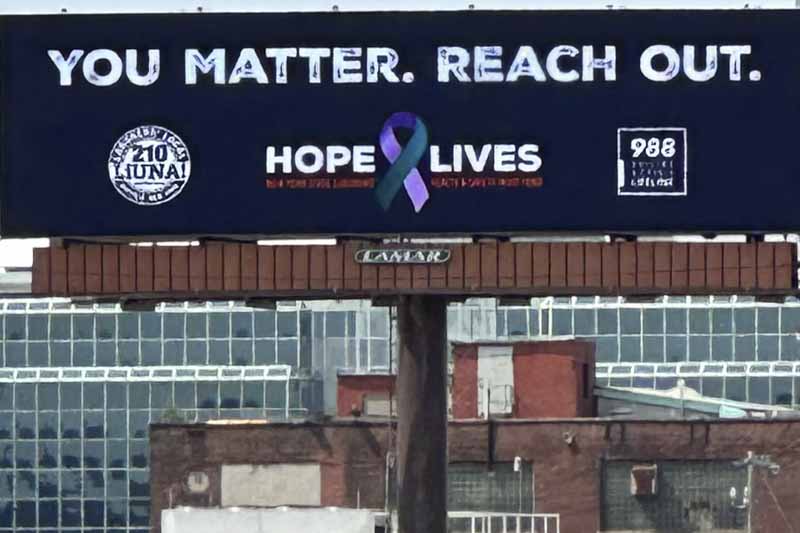
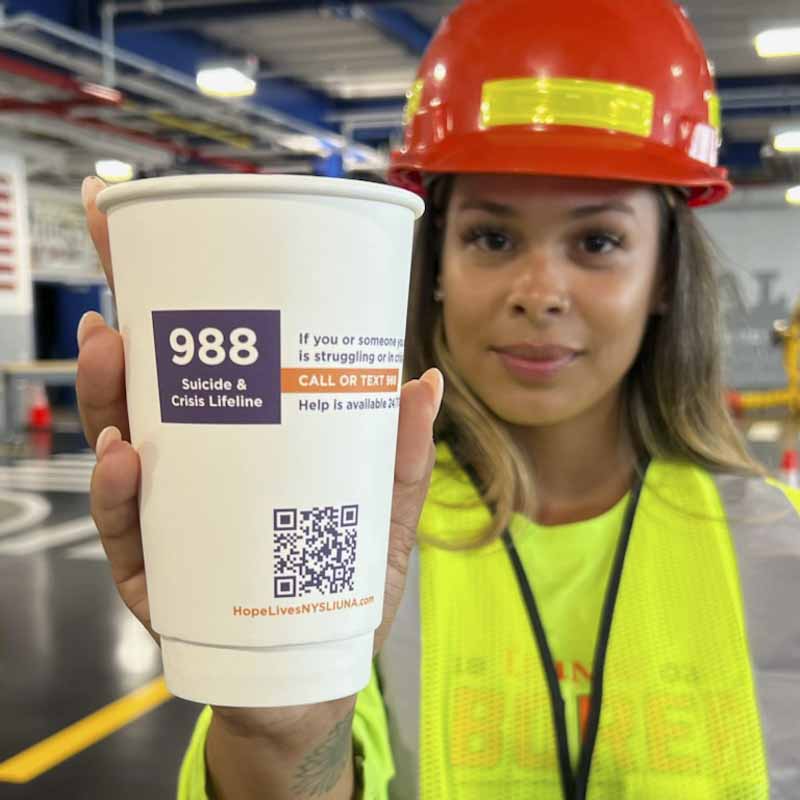
The Laborers’ Health and Safety Fund’s Hope Lives campaign is helping keep that conversation visible within the construction industry. Now entering its sixth year, Hope Lives focuses on consistent messaging and making access to resources as seamless as possible. A single QR code on Hope Lives materials provides members with quick access to information and resources.
The campaign has also made suicide prevention visible in the everyday construction environment, including 988 and Hope Lives stickers on hardhats and Hope Lives merchandise. “Hope Lives has brought mental health in the construction industry front and center and it is undoubtedly one of my proudest moments in this union,” Mr. Marchese said. The campaign reflects a broader change in the way the industry views mental health. Rather than treating mental health as something separate from safety, unions and contractors are increasingly incorporating it into the same culture of responsibility that has long been part of construction.
Don’t Walk By It
Mr. Orth believes that message needs to continue. “We want workers to look out for one another psychologically just as they look out for one another physically,” he said. That can mean noticing a change, asking a question, listening without judgment and helping someone connect with appropriate support. It can also mean following up with a coworker after the initial conversation.
Leadership is important as well. When respected leaders, supervisors, union representatives and industry professionals talk openly about mental health, it gives workers permission to do the same. Mr. Orth’s message to the construction industry is straightforward: “Safety in the construction industry has always meant looking out for one another. That same commitment must extend to mental health and suicide prevention. We need to create a culture where noticing when someone is struggling, asking how they are doing, and helping them connect to support is as much a part of workplace safety as preventing a physical injury. Sometimes a simple conversation can make an extraordinary difference—and it can save a life.”
Help Is Available
A worker does not have to wait until reaching a crisis point to ask for help. A person can talk with someone they trust, including a family member, friend, coworker, union representative, employee assistance program, healthcare provider or counselor. And there is another resource available at any time.
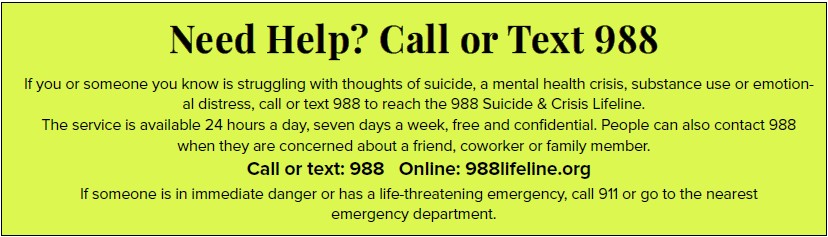
Call or text 988
The 988 Suicide & Crisis Lifeline is available 24 hours a day, seven days a week. Anyone experiencing emotional distress, depression, anxiety, substance use concerns, thoughts of suicide or simply feeling overwhelmed can call or text 988. You can also contact 988 if you are concerned about someone else and need guidance about what to do.
A trained crisis counselor will listen, provide support, assess safety and help connect callers with appropriate resources. You do not have to be on the verge of suicide to contact 988, and you do not have to know exactly what kind of help you need before reaching out.
Call or text: 988; Online: 988lifeline.org
What You Can Do on the Jobsite
NOTICE THE CHANGE – If a coworker suddenly seems different, don’t ignore it.
ASK THE QUESTION – A simple “Are you okay?” can open the door.
LISTEN WITHOUT JUDGMENT – You don’t have to have all the answers. Sometimes listening is the most important thing you can do.
CONNECT TO HELP – Encourage the person to reach out to a trusted person, union representative, employee assistance program, healthcare provider or 988.
FOLLOW UP – Continue to check in. Let your coworker know that you meant it when you said you were there for them.
In construction, looking out for one another has always been part of the job. Now, that responsibility is taking on a broader meaning. A safe jobsite is one where workers are protected not only from physical hazards, but where people feel seen, supported and comfortable asking for help.
Source: Centers for Disease Control and Prevention, National Vital Statistics System, 2021.
Published: September 17, 2026.